
Always under construction
Grief, hope, and the work of becoming
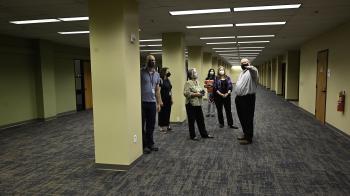
If you’ve ever lived in the midst of a house renovation, you know something about the kind of stress that goes with it. Multitudes of decisions, contractor mistakes, cost overruns, materials delayed, inspections failed and dust in places you didn’t know dust could reach. As the tension mounts, couples argue, kids are fractious because they’re limited to one room, and everyone eats off paper plates because the kitchen isn’t usable. You second guess everything, including the wisdom of doing the project in the first place.
But the thing that holds it all together is the vision of what’s coming — a cozy new family room where everyone can gather around the fireplace and the big screen TV, perfect for video games and family movie night. A refreshed kitchen with appliances like a new stove that has five fully functioning burners and an oven door that doesn’t fall off mid-bake. A new bathroom for the kids so Mom and Dad can finally have some privacy (sort of). And so on …
That vision keeps most of us on this side of a complete freak-out. It helps us hold on to hope that somehow it will all work out.
This is how I see the church that we all love — or sometimes love to hate. It seems like we’re always in the middle of a renovation — from the everyday work of congregational life to the larger work of shaping our shared life as a denomination. Since 2010, no, 1983 … wait … 1956 … um … since the Reformation, we have been remodeling. Just think about how many times have we heard the words of Isaiah: “Look! I am about to do a new thing; now it springs forth, do you not perceive it?” Eyes roll whenever that metaphor rolls out.
But it’s true, isn’t it? Really true.
God is always doing something new. As much as we try to hold things steady, the world keeps turning. Seasons change; new technology emerges; babies are born; people die; even concrete eventually yields to time and weather. Our world is never not new. We are always being refurbished. Maybe Jeremiah’s image is better: “Just like the clay in the potter’s hand, so are you in my hand.” We are being shaped and reshaped — again and again.
I’ve seen a lot of that shaping over the past four years in the work of Unification and the newly formed Presbyterian Life & Witness. There have been so many shifts — big and small — that this time has felt disorienting for all of us. From moving from a single office of peacemaking to ensuring that peacemaking is a shared responsibility across the whole agency, to reimagining global mission as deeper, more mutual engagement, God continues to work on us.
And as hard as it is to let go of what we have known, we have to be honest. God didn’t make us so that we would just stand still. And that reality has been one of the hardest things for me to face. Because I love what makes us US.
I love that we take theology seriously and that we wrestle with it together. I love our connectional life — the conviction that we belong to one another, that no congregation stands alone. And I love that when we show up, we stay in the room, and keep doing the work even when it’s slow and complicated, and especially when we don’t quite know what will come of it.
It’s so hard, though. When structures shift and familiar ways of organizing ourselves are set down, it doesn’t feel abstract. It feels personal. Letting go of what we know how to do so that we can take up work we don’t yet fully understand — that feels next to impossible.
But we need to name that. It’s OK to grieve. In fact, it would be strange if we didn’t. Grief isn’t a sign that something has gone wrong. It’s a sign that we have loved something deeply. Grief reminds us that we still care, we still have hope. This is a gift the church can offer the world: the ability to carry grief alongside hope. Since that long ago resurrection morning, we have known how to do both. Every season of re-forming has required it, and God has been in the midst of it all along.
After all these years — watching the church wrestle and rebuild, and pastoring communities that had to embrace change or risk losing themselves — I find myself holding onto something I’ve only recently come to understand: The things I love most about us are not fragile. They don’t live in any one structure. They aren’t dependent on us getting everything exactly right. They show up whenever we gather in good faith — seeking God, speaking truth, and choosing to remain connected, even when it’s hard.
I see this in the congregations I’ve served as they learned new ways to live in and with their communities. I see it in leaders asking new questions, even when the answers aren’t clear or comfortable. I see it in quiet, faithful work that doesn’t make headlines but continues to bear fruit. And that gives me hope.
When we can embrace the reality that renovation is ongoing, I believe we will find the peace we need and the courage to keep going. Because God’s vision for justice and love is still before us. Even in the dust and disruption, even when we’re eating our supper on paper plates, even when we can’t yet see how it will all come together, God is at work in our midst — shaping something we cannot fully see yet, but that, by grace, we will one day inhabit together.
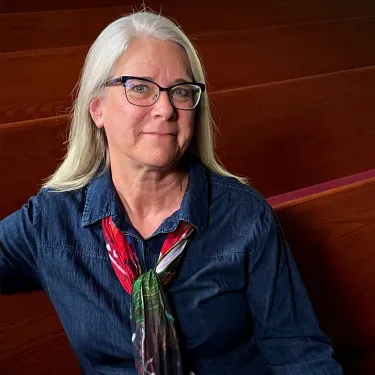
The Rev. Debra Avery is a member of the Unification Commission.
You may freely reuse and distribute this article in its entirety for non-commercial purposes in any medium. Please include author attribution, photography credits, and a link to the original article. This work is licensed under a Creative Commons Attribution-NonCommercial-NoDeratives 4.0 International License.


