Solidarity with Cuba
Two senior leaders in the PC(USA) discuss their recent ecumenical solidarity visit

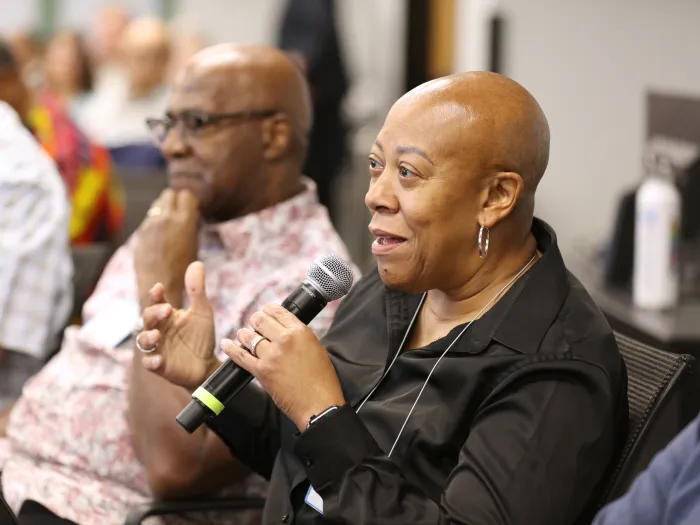
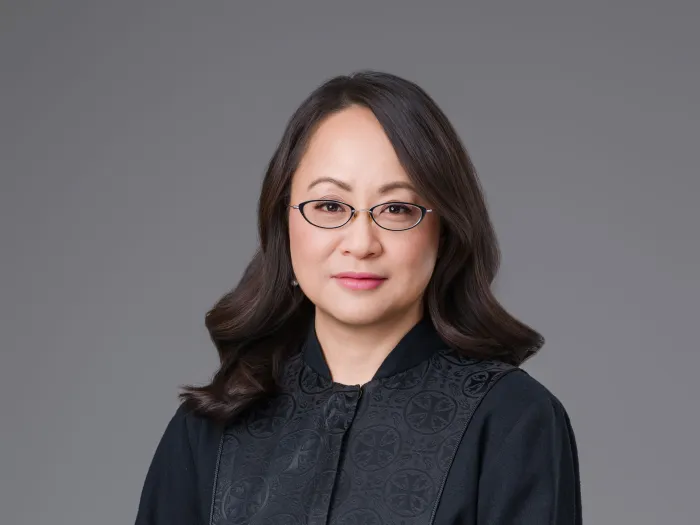
LOUISVILLE — Just two days after returning from an ecumenical solidarity visit to Cuba, the Rev. Jihyun Oh and the Rev. Jimmie Hawkins said they marveled at the role the church plays in a Cuba that’s long suffered from an embargo — Cubans use the term “blockade” — that started with President Kennedy and has intensified in recent weeks under President Trump.

“We were featured on the [local] news the three days we were there,” said Oh, Stated Clerk of the General Assembly and Executive Director of Presbyterian Life & Witness. “One of the things the church partners talked about was how to continue advancing the role of church in Cuban society and what that looks like, and the important community work they’ve been able to do.”
“We had really good discussions on religious freedom” with Cuban government officials, said Hawkins, the PC(USA)’s advocacy director who first traveled to Cuba in the 1990s. “The gist was Cuba is still evolving” and government officials there “are starting to learn the church is vital in their work.”
The two PC(USA) senior leaders joined ecumenical partners including the World Communion of Reformed Churches, the World Council of Churches and numerous other international church partners. In a statement, ecumenical leaders said that partners have for many years “expressed their concerns regarding the grave humanitarian and human rights impacts of the unilateral economic embargo” imposed on Cuba by the United States “in violation of numerous UN General Assembly resolutions calling for it to be lifted.”
Days before the ecumenical visit, the United Nations reported that dwindling energy reserves were creating “acute humanitarian risks” for Cuba because 90% of essential services rely on oil. According to the statement, among Cuba’s most vulnerable population are the 5 million people living with chronic illnesses whose treatments are at risk of disruption and 1 million people who rely on tanker trucks for drinking water.
The visit, from March 28-31, included meetings with church leaders, the Cuban Council of Churches, government officials and local communities. The delegation visited the National Institute of Oncology in Havana and participated in a special ecumenical service and Palm Sunday worship. Cuban President Miguel Díaz-Canel received the delegation on March 30.
The statement noted that Cuban people who met with the delegation “expressed in very certain terms their desire to resolve issues through dialogue, peaceful and diplomatic means instead of military confrontation, a position affirmed very strongly by the Cuban government.”
At the conclusion of the visit, discussions with the Cuban Council of Churches led to “the possibility of convening an international ecumenical forum to strengthen solidarity among churches of the world with the Cuban churches and people,” the statement noted, “and to raise awareness on the international stage of the cruelty and injustice of the indiscriminate collective punishment inflicted on them.”
The blockade has led to frequent power interruptions and a lack of raw materials for necessities including home repairs, Oh said. “Somehow they are making it work, but you have to plan your life around the electricity going out,” she said. During their time there, the delegation, which stayed in a private hostel, spotted lines to buy bread and to withdraw funds at the bank.
“Toilets won’t fill up because the pumps aren’t working,” Oh said. At one restaurant, coffee was unavailable because the coffee machine uses too much energy.
“When we talked to Cubans, they would talk about people being hungry every day,” Hawkins said. There aren’t as many cars on the streets as there were before, he said, and they’re being replaced by motorcycles and hybrid vehicles. “People are using more solar panels,” Hawkins said. “They are a proud people. It was amazing to hear how they will not be controlled, but want to be a partner with the United States and with the rest of the world.”
While Cuba was founded as an atheistic and scientific community, “they see now that religious communities can be part of the fabric of Cuban society that is quite important,” Oh said. “We heard from church partners and others that they are trying to stay committed to solidarity with the most vulnerable.”
The visit’s “great conversations focused on religious and humanitarian topics,” Oh said. “It’s the work of accompaniment, solidarity and advocacy we are called to do, amplifying the church’s voice.”
“We really need to expand the way Cuba is talked about,” Hawkins said. “It’s one of the friendliest places you will visit.” Race “has not been a negative influence on their country the way it has been in other parts of the world. They greet one another equally. They are open and loving and caring. If you are Cuban, you are Cuban.”
The PC(USA)’s closest partner is the Presbyterian-Reformed Church in Cuba, which Oh said is “doing some amazing work in liturgy and theology and community-based ministry.”
“The communities they are serving really need that sense of solidarity and service and care,” she said. In addition, the delegation met with Catholic Cardinal Juan de la Caridad García Rodríguez, who’s served as Archbishop of Havana since 2016. The delegation spoke with Cardinal Rodríguez and his staff “about Christian unity and what that can look like,” Oh said.
The Matanzas Evangelical Theological Seminary now has a satellite campus in Havana, Oh said. That satellite was opened in large part by PC(USA) partners who helped turn a house into a seminary branch with multiple classrooms and a library, she said. The IPRC, the Spanish-language acronym for the Presbyterian-Reformed Church in Cuba, “is grateful for the ongoing relationship and commitment of the PC(USA), congregations and the Cuba Partners Network,” she said.
Hawkins noted PC(USA) congregations including Myers Park Presbyterian Church in Charlotte, North Carolina, First Presbyterian Church in Ft. Worth, Texas, and Westminster Presbyterian Church in Minneapolis, Minnesota, are among those with longstanding partnerships with Cuban faith communities.
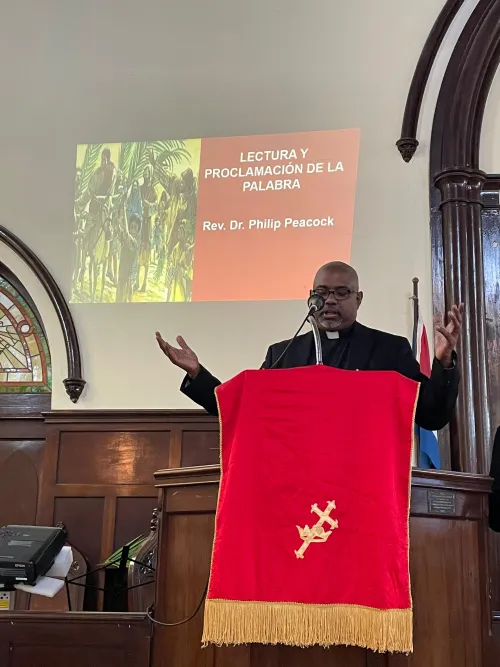
In addition to Oh and Hawkins, the ecumenical delegation to Cuba included The Rev. Prof. Dr. Jerry Pillay, General Secretary of the World Council of Churches; the Rev. Philip Vinod Peacock, General Secretary of the World Communion of Reformed Churches; the Rt. Rev. Anthony Poggo, Secretary General of the Anglican Communion; The Rev. Dr. Reynaldo Ferreira Leao Neto, General Secretary of the World Methodist Council; and the Rev. Dr. Michael Blair, General Secretary of the United Church of Canada. Read additional reporting on the visit here.
You may freely reuse and distribute this article in its entirety for non-commercial purposes in any medium. Please include author attribution, photography credits, and a link to the original article. This work is licensed under a Creative Commons Attribution-NonCommercial-NoDeratives 4.0 International License.