Along a sacred migration
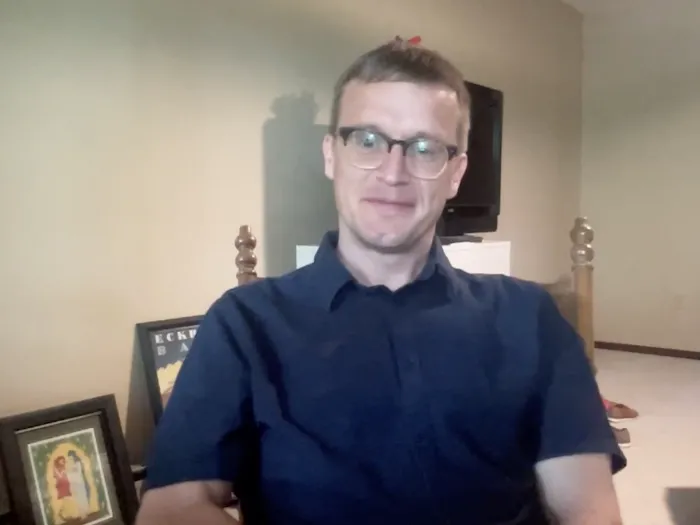
Steven Charleston, a Choctaw elder and retired Episcopal priest, shares his rich experiences on “A Matter of Faith: A Presby Podcast’
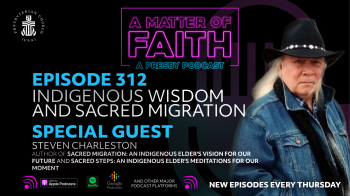
LOUISVILLE — People of faith are on a sacred migration that looks a lot more like a spiritual journey than it does, say, a journey across borders.
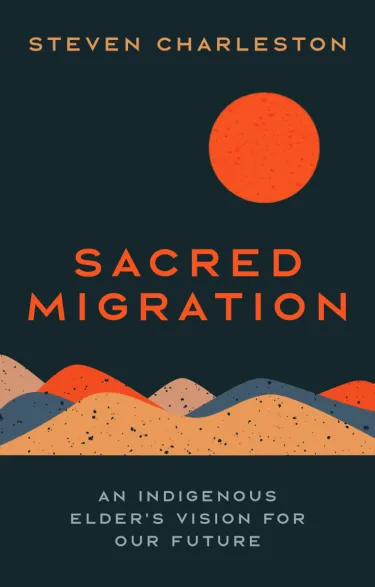
On Election Day, Simon Doong and the Rev. Lee Catoe, the hosts of “A Matter of Faith: A Presby Podcast,” invited Choctaw elder and retired Episcopal priest and scholar Steven Charleston to the podcast to discuss Charleston’s most recent book, “Sacred Migration: An Indigenous Elder’s Vision for Our Future,” as well as his upcoming book “Sacred Steps: An Indigenous Elder’s Meditations for Our Moment.” Listen to their 49-minute conversation here.
Election Day proved to be a propitious day for the conversation, with “millions of people” hoping “they’ll get some answers after this election to questions that have been bothering them for quite a while,” Charleston said, including “where are we going, what are we doing, who’s in charge here and what should I be doing?”
“I don’t think you need a poll to find out how many people in our country are saying, ‘Yes, that sounds like me. I’ve been anxious and I’ve been worried. I’d like some answers,’” he said. In “Sacred Migration,” Charleston said he’s trying to express “the feeling that we have a future again, one we can rely on, look forward to and work toward together.”
People “who were our most ancient ancestors got up, decided they wanted to see a change, and began walking into it,” Charleson said. “From that single impetus, that single movement, came everything that we know or are today.”
“That’s the vision of migration that I’m trying to help people understand, because it’s getting confused as we see the horrible stories of migrants and refugees being denied their rights,” Charleston said. “I want to turn toward something — not just away in revulsion or feeling helpless. There is something we can do … When our ancient ancestors did that — when they began to perceive their reality in new ways and invented things like the wheel, and domesticated the wolf — we began to see amazing changes in our lives. I’m saying we can see it again.”
Charleston said he’s not trying to impart a message of “this is your vision” to readers and listeners.
“In fact, I refer to ‘the hidden land,’ which is in every human’s heart, the community of humanity that’s been migrating together, walking together for millennia,” Charleston said. “We are agents of our own becoming, and the guides of our evolution.”
“People can join this migration without moving,” he said. “It’s a virtual migration within the mind and heart.”
Charleston said he’s “not the guru or the medicine person people may be looking for. … I’m a human being who simply wants things to work. I’m an old-timer who would like to know I can get medical care.”
All Indigenous people have been migrants, he noted. “We were forced off our own land onto the Trail of Tears and became migrants in our own country,” he said, adding that he understands “another lesson my ancestors taught me: You get up and move. You don’t sit still when it’s time to change. You create a new emergence in a new hidden land where you can find what you’re looking for.”
Each of us has access to our own hidden land, he said, “a place we go to when we need some peace and quiet, some hope and dignity.”
“We don’t have to be consigned to the sadness and the terror we’ve been living with for so long,” Charleston said. “We need to feel hopeful there’s something we can do to do together, and do it simply.”
“Ours is an old story, and the most important thing is that some people remember it,” Charleston said. “We learned how to face adversity together.”
“I don’t believe we can do this alone,” he said. Even with the advantages of science and technology, “we can’t create a perfect solution [to solve] every issue. But there’s nothing we can’t make better, and every human being is needed.”
At the center of the work are qualities like kindness, Charleston said.
“Is being kind too simple for our time? Kindness seems simple, but it’s inexplicable and evolutionary,” he said. “We’ve almost forgotten the power, beauty, gentleness and poetry of kindness. Kindness may be the first sermon every preached.”
Other core items Charleston illuminates in “Sacred Migration” are humility, imagination and perception. He called humility “the willingness to do things other people won’t do or don’t want to do. You’re willing to show people it can be done. There is enormous power in humility.”
The “whole migration of the human race began with someone in Africa who had imagination. The rest of us came from that person who probably felt misunderstood and marginalized,” he said. “It was someone who took the time to do the star-gazing to open up doors of imagination,” the act of “releasing ideas that are new and untried.”
“How do we get there?” he asked. “We change our perception.”
Charleston’s own journey began when he was 4. His great-grandfather told the boy that he was reading Bible stories to him and telling him “stories of our people because someday I’d grow up to be a preacher and I would need to know them. That started me taking this seriously,” he told the hosts. “My spiritual journey has been a very rich one.”
“We always love to have intergenerational conversations,” Catoe told Charleston as the conversation was wrapping up. “I am grateful for your wisdom.”
“Some people want a prescription: This is what you do and this is where it’s going to get you,” Doong observed. “But that’s not what faith is all about.”
New episodes of “A Matter of Faith: A Presby Podcast” drop every Thursday. Listen to previous editions here.
You may freely reuse and distribute this article in its entirety for non-commercial purposes in any medium. Please include author attribution, photography credits, and a link to the original article. This work is licensed under a Creative Commons Attribution-NonCommercial-NoDeratives 4.0 International License.