A community of mutual belonging
Drawing on Paul’s letter to Philemon, Dr. Ruth Padilla DeBorst delivers the W. Don McClure Lecture at Pittsburgh Theological Seminary

LOUISVILLE — Dr. Ruth Padilla DeBorst, the Richard C. Oudersluys Professor of World Christianity at Western Theological Seminary in Holland, Michigan, delivered the W. Don McClure Lecture last week at Pittsburgh Theological Seminary as part of the World Mission Initiative Conference.
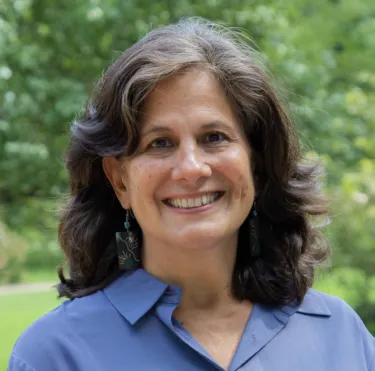
The theme for her Friday evening talk was “Global Neighboring as Gospel Witness,” and she turned to the Book of Philemon, where she said Paul has this message for Philemon, especially regarding the slave Onesimus, who was like a son to Paul: “He belongs to you. You belong to each other.”
“Paul’s words were shocking. They blatantly contravened all logic. They made no economic sense,” she said. “There was no room for them in the Roman imperial system.”
After all, Onesimus had escaped and taken with him some of his master’s property. “Yet Paul, boldly and lovingly, addresses Philemon, celebrating the love that joins them in Christ and making this subversive call to a new form of belonging.”
“Here’s the call” to Philemon, Padilla DeBorst said. “Receive Onesimus back, but not now as a slave, much less a fugitive thief, but as a worthy brother.”
What grounds does Paul have to set the bar so high?
“Paul rests his entire case on the demands of Jesus’ way, the way of love in human dignity, of belonging in a new and just community generated by Jesus’ life and ministry,” she said. “Paul is advocating for a form of global neighboring that subverts the dominant dehumanizing logic that ruled the empire.”
Jesus’ way, she said, “involved and still requires acknowledging and stepping down from privilege, committing locally and living globally … in the reign of God” and “in the midst of the social and historical realities of the time.”
Eugene Peterson has Jesus moving “into the neighborhood” in The Message’s rendering of John 1:14. “Creator God, the limitless sustainer of all life, stepped out of God’s unique and privileged position and chose to squeeze into a fragile human frame,” Padilla DeBorst said. It wasn’t just so Jesus could “enjoy the warmth of human friendship and the beauty of the desert scenery,” but “to suffer depravation, exhaustion, doubt, heart-wrenching pain, loss, abandonment and death as a victim of an oppressive religious and political system.”
“All of this God did in order to restore all broken relationships, to show us what it means to become true neighbors and what it means to welcome God’s self into the Creation neighborhood.”
And what neighborhood did God choose — Rome, China, Byzantium, Jerusalem? “None of the above,” she said. “God chose the non-choice — the backwater, the looked-down-upon, underdeveloped and agitated Judea.” Jesus spent “most of his short and public life in and around Capernaum, a multicultural parish where languages, lifestyles, values and religions intermixed and clashed, where the iron fist of Rome was oppressively felt.”
Roman soldiers were everywhere, “yet far from shirking from them, Jesus engaged with them,” she said, “even to the point of healing the servant of a Roman centurion.”
“Jesus lived and taught neighborly engagement. He drew a community around himself, his teaching and his calling, and around a vision of a different kind of neighborhood,” one of “sacrificial peacemaking,” she said. “Its trappings are hunger and thirst for justice. Its learned culture is purity of heart. Its fount of wisdom is poverty, and its religious piety is boundless compassion.”
“Meanwhile, he rid the temple of marginalizing and corrupting practices,” she said, but Jesus’ practices “were so unconventional that the system had no room for them. He was executed outside the gates of Jerusalem, where the powers that be had no space for another way of living together.”
It was “a new community of unlikely belonging, with Jews and non-Jews, with people like Philemon and Onesimus, with slaves, freed slaves, free women and men who ministered side by side,” she said. It was a community “that laughed at human-constructed borders and imperially-imposed exclusions, and constructed subversive belonging from the bottom up.” It was a community “that far transcended its local expressions, subverted the worldly largesse of power and dependency and repositioned all its members as equals at the foot of the cross.”
At the same time “neighboring across difference did not come easily,” she said. “The admonitions and encouragements of the various New Testament epistles attest to the persistence of ethnic and culture biases, human greed, hypocrisy, theological conflict and personality clashes, which made obvious the not-yet of the reign of God.”
We must “face the complicated challenge of divesting from power and levering our privilege in favor of people our globalized consumer society — not God — has left behind,” she said, “so that we, like Onesimus and Philemon, may join in new God-honoring, unlikely belonging and neighboring across social, economic and political lines.”
Padilla DeBorst touched on three significant challenges being experienced by “our global village”:
- The unwelcome of migrants and refugees. “People of color are broadly being stereotyped as dangerous aliens,” but “in most cases the weapons being left behind by these supposed criminals are lawnmowers, hammers, cement and wood, evidence of their work in hotels, restaurants, gardens and so on. In this context, silence is complicity,” she said. Faithful gospel witness requires that followers of Jesus’ neighboring way “wake up and resist the injustices being perpetuated, engage in concrete acts of support and compassion for these neighbors, pray for the end of persecution … take proactive steps of advocacy for policy change, and open up space in homes, churches and neighborhoods for these siblings to offer their gifts and perspectives unencumbered by crippling fear.”
- The onslaught of Palestinian lands and bodies. It’s been three years since “the horrendous attack of Hamas,” she noted. “Truly, this armed conflict is not the only one in our wounded world today, yet as Christians we bear a special responsibility because it is Christian Zionism that is bolstering and justifying the occupation [of the West Bank and Gaza].”
- The climate crisis. “The heavens are finding it even more difficult to tell of the glory of God, smothered as they are in pollution,” she said. “Recognition of God’s love for the entire created order requires that Christians be at the forefront of the struggle for environmental justice — the work of conservation, restoration, mitigation and adaptation as acts of worship to Creator and recognition of our creaturely nature and our interdependence within that community. No act is too small.”
We belong to one another, Padilla DeBorst reminded those gathered in person and online, “regardless of our color, our language, our savings, our degrees, our marital status, our success or our lack thereof. It is in this community of mutual belonging in the neighboring way of Jesus across difference that God chooses to dwell.”
“So may our prayer be: that the Spirit will shape us in this always welcoming community of global neighboring of witness to God’s love for the entire cosmos, until God calls us home or God’s kingdom comes in full. Amen.”
You may freely reuse and distribute this article in its entirety for non-commercial purposes in any medium. Please include author attribution, photography credits, and a link to the original article. This work is licensed under a Creative Commons Attribution-NonCommercial-NoDeratives 4.0 International License.