Recent Works by Our Researchers
The Presbyterian Historical Society’s holdings support scholarship on a vast range of topics. On this page, we present a selection of recent publications by researchers who have worked with our collections.
For additional works focused on LGBTQIA+ history in the PC(USA), see the Pam Byers Memorial Collection page.
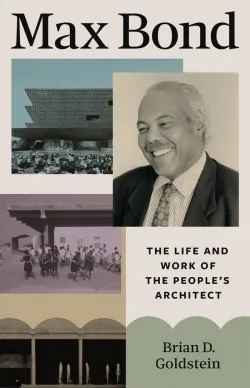
Max Bond: The Life and Work of the People's Architect, by Brian D. Goldstein (Princeton University Press, September 2026)
J. Max Bond Jr. (1935-2009) was a civil rights activist, educator, and architect who shaped such iconic structures as the King Center for Nonviolent Social Change in Atlanta, the Smithsonian's National Museum of African American History and Culture in Washington, DC, and the 9/11 Memorial & Museum in Manhattan. Driven by the concerns of the civil rights movement, he insisted on a practice centered on deep social engagement during years when his profession became preoccupied with celebrity and spectacle.
Harvard educated and son of an eminent African American family, Bond designed housing, cultural institutions, community centers, and campuses amid an era of sweeping changes in architecture, urbanism, and American culture. He expressed an architectural vision that was democratic and inclusive, international in orientation, and celebratory of cities and their diverse residents. Yet his work has often been overlooked. Award-winning historian Brian Goldstein renders it visible.
Beautifully illustrated, Max Bond is the definitive biography of one of the most important architects of our time, whose aspiration toward an architecture by and for the people was as urgent in his day as it remains in our own.
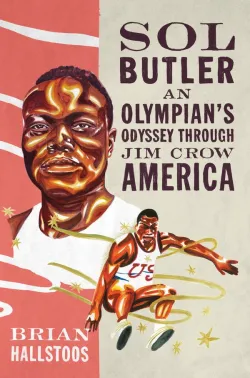
Sol Butler: An Olympian's Odyssey Through Jim Crow America, by Brian Hallstoos (University of Illinois Press, January 2026)
A superstar in both football and track and field Sol Butler pioneered the parlaying of sports fame into business prosperity. Brian Hallstoos tells the story of a Black athlete's canny use of mainstream middle-class values and relationships with white society to transcend the athletic, economic, and social barriers imposed by white supremacy. Butler built on his feats as a high school athlete to become a four-year starter for the football team at Dubuque German College (later the University of Dubuque), a record-setting sprinter and long jumper, and an Olympian at the 1920 Summer Games. Hallstoos follows Butler's sporting accomplishments while charting how family and interracial communities influenced the ways Butler tested the limits of social and physical mobility and gave him an exceptional ability to discern where he might be most free. From there, Hallstoos turns to Butler's use of fame to boost his entrepreneurial efforts and his multifaceted success capitalizing on his celebrity in the Black communities of Chicago, New York, and Los Angeles. An engaging look at a forgotten trailblazer, Sol Butler illuminates the multifaceted life of a Black sports entrepreneur.
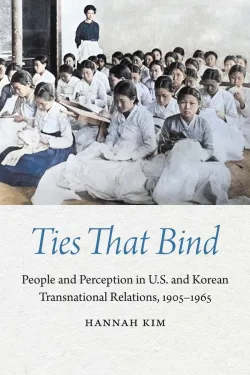
Ties That Bind: People and Perception in U.S. and Korean Transnational Relations, 1905-1965, by Hannah Kim (University of Nebraska Press, August 2025)
Ties That Bind narrates five stories of how a transnational community helped shape American perceptions and understandings of Korea and Koreans, from a time when only a small number of Americans knew anything about Korea to a time when most Americans were aware of Korea's geopolitical significance. Three of the moments took place when Korea was a colony of Japan: the so-called Conspiracy Case in 1911, the independence movement of 1919, and the efforts to recognize Korean independence during World War II. The other two moments transpired in the context of the Cold War, when Korean orphans and Korean exchange students came to the United States in the 1950s.
In these five stories, the interplay of people, perceptions, and official and unofficial policy can be seen in the work of people who tried to influence U.S. and Korean relations by binding Americans and Koreans through shared values and experiences. They did so by portraying Koreans as Christian converts, as supporters of democracy and democratic ideals, and as people embracing Western or American cultural norms. The actors in this book did not always succeed in their goals, but through their endeavors, they facilitated policy discussions, forged ties between the United States and Korea, and began to break down cultural barriers between Koreans and Americans.
Re-inventing Islam: Gender and the Protestant Roots of American Islamophobia, by Deanna Ferree Womack (Oxford University Press, May 2025)
From the end of the American Civil War to the start of World War II, the Protestant missionary movement unintentionally tilled the soil in which American Islamophobia would eventually take root. What ideas did missionaries in Islamic contexts pass on to later generations? How were these ideas connected to centuries-old Protestant discourses about Muslims and gender beginning in the Reformation? And what bearing does this history have on the birth of Islamophobia and on Christian-Muslim dialogue efforts in the US today? In answering these questions, Re-inventing Islam traces the gender constructs that have informed historical Protestant perceptions of Islam, especially in the far-reaching textual, visual, and material influences of the American and British movement for missions to Muslims. This book first considers Protestant discourse about Muslim women and men from the Reformation to the Enlightenment. Then it turns to the colossal archive of literature, images, and cultural objects that missionaries--and particularly missionary women--collected from Islamic contexts and used to inform and motivate their constituents.
Anglo-Protestants in the nineteenth and early twentieth centuries perpetually re-invented stereotypes about Muslims and used these negative images to achieve particular Protestant theological and political purposes, including missionary aims. They did so when disseminating gender critiques widely to Protestant men, women, and children. Why did they re-invent Islam? Deanna Ferree Womack argues that they did so to reinforce Protestant theological claims, to justify their evangelistic endeavors, to express both humanitarian concern and Eurocentric views of the world, and to support British and American cultural, economic, and military expansion. Simultaneously, however, this same missionary movement educated its constituents about diverse Islamic cultures, in part by providing humanizing images of Islam. Missionaries also formed personal relationships with Muslims that would open pathways toward formal efforts of Christian-Muslim dialogue after the mid-twentieth century. Americans have inherited all of these legacies. In revisiting this history readers will find new possibilities for building a more open and just future.

The Spirit of the Game: American Christianity and Big-Time Sports, by Paul Emory Putz (Oxford University Press, October 2024)
The star quarterback takes the field for the national championship game, "John 3:16" scrawled on his eye black. The NBA's Most Valuable Player leads his team in Bible study. The newly crowned World Series champion thanks God in a postgame interview while wearing a t-shirt that declares "Jesus Won." Such displays of faith have become commonplace on America's baseball diamonds, basketball courts, football fields, and beyond. How did religion become so entwined with big-time sports in America?
The Spirit of the Game provides the answer to this question by offering a sweeping history of the Christian athlete movement in the United States. Beginning in the 1920s, American Protestants sensed that sports were becoming a rival for Americans' devotion, so they sought to carve out a home for religion within big-time sports. Their success was remarkable. By the end of the twentieth century they had created a thriving religious subculture that provides spiritual support for coaches and athletes while also recruiting successful sports stars to promote an evangelical Protestant version of the Christian faith and the American story. The Spirit of the Game tells the story of this remarkable movement and its impact on American religion--and America's religion of sports.
Mission Manifest: American Evangelicals and Iran in the Twentieth Century, by Matthew K. Shannon (Cornell University Press, June 2024)
In Mission Manifest, Matthew Shannon argues that American evangelicals were central to American-Iranian relations during the decades leading up to the 1979 revolution. These Presbyterian missionaries and other Americans with ideals worked with US government officials, nongovernmental organizations, and their Iranian counterparts as cultural and political brokers--the living sinews of a binational relationship during the Second World War and early Cold War.
As US global hegemony peaked between the 1940s and the 1960s, the religious authority of the Presbyterian Mission merged with the material power of the American state to infuse US foreign relations with the messianic ideals of Christian evangelicalism. In Tehran, the missions of American evangelicals became manifest in the realms of religion, development programs, international education, and cultural associations. Americans who lived in Iran also returned to the United States to inform the growth of the national security state, higher education, and evangelical culture. The literal and figurative missions of American evangelicals in late Pahlavi Iran had consequences for the binational relationship, the global evangelical movement, and individual Americans and Iranians.
Mission Manifest offers a history of living, breathing people who shared personal, professional, and political aims in Iran at the height of American global power.

Missionary Diplomacy: Religion and Nineteenth-Century American Foreign Relations, by Emily Conroy-Krutz (Cornell University Press, March 2024)
Missionary Diplomacy illuminates the crucial place of religion in nineteenth-century American diplomacy. From the 1810s through the 1920s, Protestant missionaries positioned themselves as key experts in the development of American relations in Asia, Africa, the Pacific, and the Middle East. Missionaries served as consuls, translators, and occasional trouble-makers who forced the State Department to take actions it otherwise would have avoided. Yet as decades passed, more Americans began to question the propriety of missionaries' power. Were missionaries serving the interests of American diplomacy? Or were they creating unnecessary problems?
As Emily Conroy-Krutz demonstrates, they were doing both. Across the century, missionaries forced the government to articulate new conceptions of the rights of US citizens abroad and of the role of the US as an engine of humanitarianism and religious freedom. By the time the US entered the first world war, missionary diplomacy had for nearly a century created the conditions for some Americans to embrace a vision of their country as an internationally engaged world power. Missionary Diplomacy exposes the longstanding influence of evangelical missions on the shape of American foreign relations.

A Theology of Brotherhood: The Federal Council of Churches and the Problem of Race, by Curtis J. Evans (New York University Press, February 2024)
A Theology of Brotherhood explores how the national umbrella Christian organization, the Federal Council of Churches, acted as a crucial conduit and organizational force for the dissemination of “progressive” views on race in the first half of the twentieth century. Drawing on years of archival research, Curtis J. Evans shows that the Council’s theological approach to race, and in particular its anti-lynching campaign, were responsible for meaningful progress in some white Protestant churches on racial issues. The book highlights the contributions that their religious vision made in expanding and propagating a civic nationalist tradition that was grounded in a “universal brotherhood” and belief in the equality of all human beings, over against a racial nationalist ideology that conceived of America in ethno-racial terms. Evans makes the case that this predominantly white religious organization contributed a distinctive religious voice to visions of a pluralistic democracy, racial and ethnic diversity, and social and political reform. The volume adds a missing voice to the literature on lynching in the early twentieth century, which tends to focus primarily on the NAACP and other secular organizations.

Through Middle Eastern Eyes: A Life of Kenneth E. Bailey, by Michael Parker (Wipf and Stock, February 2024)
Kenneth E. Bailey was both a missionary and a New Testament scholar. As a missionary, first in Egypt and later in Lebanon, Israel-Palestine, and Cyprus, he experienced firsthand the life of traditional Middle Eastern villagers, which led him to the conclusion that the village culture he witnessed in the twentieth century had hardly changed since the first century. Consequently, he was able to reinterpret Jesus's parables and life experiences through this traditional culture. In a remarkable series of acclaimed books, which include The Cross and the Prodigal, Jacob and the Prodigal, and Jesus through Middle Eastern Eyes, Bailey showed that Jesus was the first mind of the New Testament who used story and metaphor to challenge the leaders of his day in ways often unappreciated by contemporary readers. Through Middle Eastern Eyes explains the origins of Bailey's key ideas and recounts his often fraught missionary career--one that included the austere and the sometimes harsh life in the simple villages of Upper Egypt, the perils of life in Beirut during the Lebanese Civil War (1975-1990), and being evacuated four times during the military conflicts in the region--that made possible his groundbreaking insights into the New Testament.
To Educate American Indians: Selected Writings from the National Educational Association's Department of Indian Education

To Educate American Indians: Selected Writings from the National Educational Association's Department of Indian Education, 1900–1904, edited by Larry C. Skogen (University of Nebraska Press, February 2024)
To Educate American Indians presents the most complete versions of papers presented at the National Educational Association’s Department of Indian Education meetings during a time when the debate about how best to “civilize” Indigenous populations dominated discussions. During this time two philosophies drove the conversation. The first, an Enlightenment era–influenced universalism, held that through an educational alchemy American Indians would become productive, Christianized Americans, distinguishable from their white neighbors only by the color of their skin. Directly confronting the assimilationists’ universalism were the progressive educators who, strongly influenced by the era’s scientific racism, held the notion that American Indians could never become fully assimilated. Despite these differing views, a frightening ethnocentrism and an honor-bound dedication to “gifting” civilization to Native students dominated the writings of educators from the NEA’s Department of Indian Education.
For a decade educators gathered at annual meetings and presented papers on how best to educate Native students. Though the NEA Proceedings published these papers, strict guidelines often meant they were heavily edited before publication. In this volume Larry C. Skogen presents many of these unedited papers and gives them historical context for the years 1900 to 1904.
The Emergence of the Evangelical Egyptians: A Historical Study of the Evangelical-Coptic Encounter and Conversion in Late Ottoman Egypt

The Emergence of the Evangelical Egyptians: A Historical Study of the Evangelical-Coptic Encounter and Conversion in Late Ottoman Egypt, 1854-1878, by Ramy Nair Marcos (Lexington Books, February 2024)
The Emergence of the Evangelical Egyptians traces the complex cultural encounter between American Presbyterian missionaries and the Egyptian Coptic Orthodox leaders over indigenous Protestant conversion in late Ottoman Egypt, 1854-1878. This examination uses various Arabic, English, and French sources to uncover the complexities behind the narratives from that time, thereby enriching the previous approach to the history, and later studies regarding Protestant conversion, and the clash of American and Arab civilizations over religious freedom. This fresh perspective will expand the story to include indigenous voices and cultural understandings.

Orthodox Christians and the Rights Revolution in America, by A.G. Roeber (Fordham University Press, January 2024)
From the civil rights movement of the 1950s to the “culture wars” of North America, commentators have identified the partisans bent on pursuing different “rights” claims. When religious identity surfaces as a key determinant in how the pursuit of rights occurs, both “the religious right” and “liberal” believers remain the focus of how each contributes to making rights demands. How Orthodox Christians in North America have navigated the “rights revolution,” however, remains largely unknown. From the disagreements over the rights of the First Peoples of Alaska to arguments about the rights of transgender persons, Orthodox Christians have engaged an anglo-American legal and constitutional rights tradition. But they see rights claims through the lens of an inherited focus on the dignity of the human person.
In a pluralistic society and culture, Orthodox Christians, both converts and those with family roots in Orthodox countries, share with non-Orthodox fellow citizens the challenge of reconciling conflicting rights claims. Those claims do pit “religious liberty” rights claims against perceived dangers from outside the Orthodox Church. But internal disagreements about the rights of clergy and people within the Church accompany the Orthodox Christian engagement with debates over gender, sex, and marriage as well as expanding political, legal, and human rights claims. Despite their small numbers, North American Orthodox remain highly visible and their struggles influential among the more than 280 million Orthodox worldwide. Orthodox Christians and the Rights Revolution in America offers an historical analysis of this unfolding story.