
오늘의 선교 연감
Mission Yearbook: PDA team members offer tools for resilience
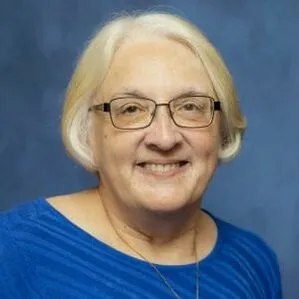
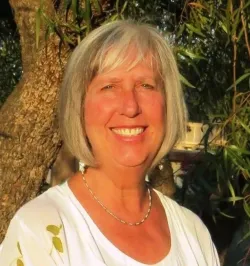
The Rev. Suzanne Malloy and Marilyn Stone, two veteran members of Presbyterian Disaster Assistance’s National Response Team, lent their experience to a recent installment of the Disaster Emotional and Spiritual Care Academy, for which PDA is a partner. Malloy and Stone used multiple examples to illustrate how caregivers can build resilience as they accompany people impacted by a disaster.
Malloy is a retired hospital chaplain and police sergeant and a 16-year volunteer member of the NRT. Stone is a retired special education teacher, an eight-year volunteer with the NRT and a member of the PDA Advisory Committee.
At the outset, Stone suggested that the more than 200 people on the call write down the names of people on their minds as well as “the tasks that are calling for your attention.” Put the list out of sight “so you know the concerns are close by but are not calling for your attention in this moment,” Stone said. “We have found this is helpful tool for the beginning or the end of the day. You may find that to be true as well.”
The two asked participants to write down what they find meaningful about the work they do. “Before you start a teleconference,” Malloy said, “think to yourself, I do this work because …” It’s a practice Malloy has long used as a hospital chaplain. “It can help us reflect on compassion satisfaction, the positive aspects of helping others,” Malloy said, whether that’s through paid or volunteer work.
The two also asked participants to jot down what stresses them. “It’s important to be aware of where stress lives in your body,” Stone said, and to use breathing exercises and other tools “to begin to relax.”
“Human beings can’t stay in chronic stress for an extended period of time and stay healthy,” Malloy said.
When we’re aware of what stresses us and how we react to that stress, “we can take steps to relax and see our behavior as not something we’re stuck with, but a response to the context in which we live and work,” Stone said. “In many instances, we can choose our response.”
Reactions are in general automatic, Stone said. A response “has that element of conscious choice.”
The goal is to “get to the point where it’s so automatic, you can use it in the midst of stress without thinking about it,” Stone said.
There can be significant and long-lasting responses to stress, Malloy said, including burnout and compassion fatigue.
“We can think of compassion fatigue as the cost of caring,” Stone said. “When we take on someone’s deep distress, we may experience compassion fatigue, especially when conditions are demanding and we have not found ways to manage and mitigate the stress.” Compassion fatigue can result in reduced compassion as well as irritability and social withdrawal.
Seeking assistance from a counselor or a coach can help, the two said. “Talking with people about important stories in our life is a powerful tool,” Malloy said. She called having an intentional listening partner “an effective resilience practice.” Such partners “will not judge us, will keep confident everything we say, will be available and will not give us advice unless we ask for it.”
“You may need to talk about your reactions to stories you’re hearing. You may want to work on some things to build your resilience,” Malloy said. “It helps to buddy up with someone.”
In addition, “you can consider if you want to offer the same [listening ear] to your intentional listening partner,” Stone said. It’s “a good idea” to find one or two intentional listening partners. Stone has two such partners and serves as an intentional listening partner to one of the two. “I find it helpful,” she said, “to schedule time after returning home from a deployment.”
The two also touched on the importance of tending to an active spiritual life in order to build resilience. “Grateful people are less likely to suffer burnout,” Stone noted. The two discussed practices such as taking a gratitude walk to “look, listen, touch and smell, and be perceptive to what you view as beautiful or awe-inspiring, and be grateful for them,” Stone said.
Mike Ferguson, Editor, Presbyterian News Service (Click here to read original PNS Story)
Let us join in prayer for:
Michael Hilliard, Sales & Event Coordinator, Presbyterian Publishing Corporation
Matt Hinkle, Analyst, Information Systems, The Presbyterian Foundation
Let us pray:
Gracious God, in all places where darkness seems to prevail, we pray that your light would shine. Raise up your children to share the good news that even when resources seem few, you nourish many. Restore your people that we may know light and life through your son, Jesus. Amen.