Sincerely, Mary Riggs
The Reparative Description Committee at Presbyterian Historical Society revisits a collection of 19th century correspondence
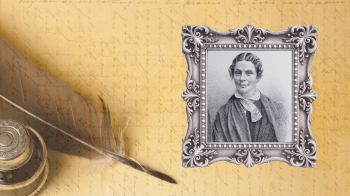
When schoolteacher Mary Ann Clark Longley left Hawley, Massachusetts, in February 1837 to become a missionary, she had been married to her new husband, Stephen Riggs, for less than a month.
Mary left behind her parents, Thomas and Martha Arms Longley, and her siblings, with whom she shared a close relationship. She and Stephen had been commissioned by the Dakota Mission of the American Board of Commissioners for Foreign Missions (ABCFM) to convert and culturally assimilate the Dakota people, the Indigenous inhabitants of the northern Great Plains (called "Sioux" by settler colonists). The newlywed Riggses set out for the unfamiliar Wisconsin Territory, which encompassed the Dakota homeland.
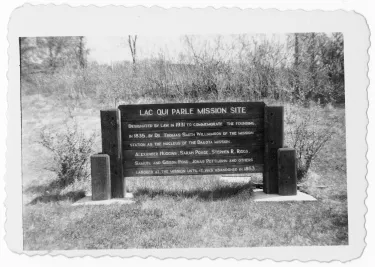
Stephen and Mary Riggs arrived at Fort Snelling in present-day Minnesota in June of 1837. There they met other ABCFM missionaries, including Margaret and Thomas S. Williamson, Samuel W. and Gideon H. Pond, and Jedediah D. Stevens and his family. Over the next three decades of their Dakota mission work, the Riggses were primarily stationed in Traverse des Sioux and Lac qui Parle Mission (called Mde Iyedan in the Dakota language) in Minnesota.
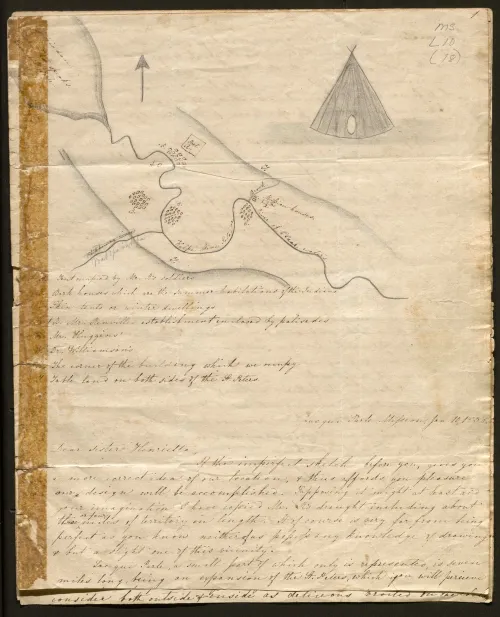
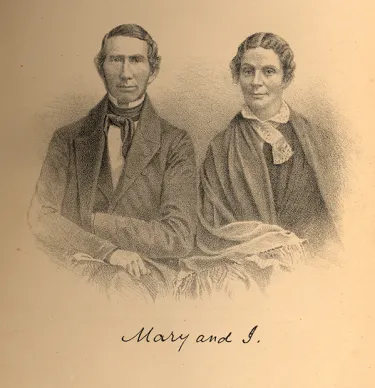
The Riggses began to study the Dakota language soon after their arrival. Stephen worked with Joseph Renville, a fur trader and interpreter of mixed French and Dakota descent, on translation work that included the Bible and hymns into the Dakota language. After the United States-Dakota War of 1862, Stephen worked with other missionaries to convert Dakota prisoners and their families to Christianity.
Mary Riggs occupied a more traditional role on the mission frontier. During her marriage to Stephen, she bore eight children, beginning with Alfred Longley Riggs in 1837. While Stephen’s missions took him away from the home, Mary was tasked with domestic work, including maintaining the home and caring for their children.
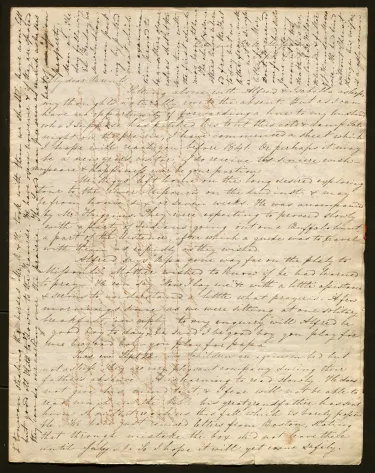
The Presbyterian Historical Society in Philadelphia holds a collection of Mary and Stephen Riggs’ correspondence from 1837 through 1851 during their time as missionaries. Primarily addressed to Mary’s parents and siblings, the letters document the encounters — and tensions — between white Protestant missionaries and the Dakota people on the Dakota homelands.
Mary, the principal writer of the letters, often describes her domestic work, daily life on the mission, the mission school, her and Stephen’s ongoing studies of the Dakota language, and her children. Her letters offer first-hand observations of Indigenous treaties and land cessions, interracial marriage ceremonies (chiefly between white men and Indigenous women), reported conversions of Indigenous people, burial rites, and occurrences of infectious disease, such as smallpox, influenza and tuberculosis.
Although Mary provided detailed and valuable documentation of daily life at the Lac qui Parle and Traverse des Sioux mission stations, her observations of Dakota social customs were filtered through a missionary lens and reflect the assumptions and prejudices of her time. The Riggses and other Protestant missionaries lived as outsiders on Dakota homelands, yet Mary often othered the Dakota people and their way of life in her letters. She was frequently critical of Dakota social structures and customs, including polygamy and what she perceived as gender inequality among Dakota men and women. She also expressed concern about her children becoming "little Indians" due to their habit of imitating Dakota customs and practices (see December 10-20, 1841 letter).
In 1839, Mary and Stephen Riggs temporarily "adopted" a Dakota girl named Anpetnakitoninwin, whom they also called Anna Wamdiokiya. Mary wrote about the girl's homesickness during her time in the Riggs household. After three months, Anpetnakitoninwin returned to her parents, including her father, Wamdiokiya, a Dakota chief. In 1851, Mary and Stephen also adopted Angelique Renville, the granddaughter of Joseph Renville, who was Stephen’s translation partner. These informal "adoptions" of Dakota and mixed-heritage children by missionaries foreshadowed later efforts to forcibly remove Indigenous children to boarding schools.
Mary’s letters often reflected the ethnocentric assumptions and Christian moral framework common among white Protestant missionaries of the 19th century. At the same time, they offer invaluable insight into what life was like for wives of missionaries living in unfamiliar places. Mary often wrote to her family in Massachusetts about her loneliness in the field. She'd inquire after their next visit, and invite them to stay for extended periods.
The full collection of Mary and Stephen Riggs letters has been digitized and is available in PHS’s digital archive, with item-level descriptions for each letter. Researchers can now read the Riggses’ correspondence for a first-hand account of missionary life on Dakota homelands.
The digitization was completed in tandem with the ongoing work of PHS’ Reparative Description Committee (RDC) to address harmful legacy language in collection description. In May 2026, the staff serving on the RDC revised the collection guide of the Mary and Stephen Riggs Papers to address outdated descriptive language and add relevant historical context.
The previous version of the Mary and Stephen Riggs Papers collection guide was under-described and omitted significant information about Indigenous peoples and communities. The biographical histories of the Riggses had a neutral tone and excluded any mention of their efforts to convert or culturally assimilate the Dakota people. Although the Dakota people were the subject of their mission work and of many letters, contextual information and description regarding them were missing from the original collection guide. By repairing the language in Presbyterian Historical Society collection guides and catalog records, PHS recognizes the complex history of Presbyterian mission work among the Dakota people. PHS also invites researchers and community members to engage with these collections in ways that are truthful, respectful, and just.
Browse the Mary Riggs letters in Pearl
Access the collection guide to RG238, the Mary Ann Clark Longley and Stephen Return Riggs Papers
More from the Reparative Description Committee at PHS
Case Study in Reparative Description: Dakota Mission Collection
Acknowledging and Repairing Harmful Description in PHS Collections
You may freely reuse and distribute this article in its entirety for non-commercial purposes in any medium. Please include author attribution, photography credits, and a link to the original article. This work is licensed under a Creative Commons Attribution-NonCommercial-NoDeratives 4.0 International License.


