Looking up at ‘The Advent Tree’
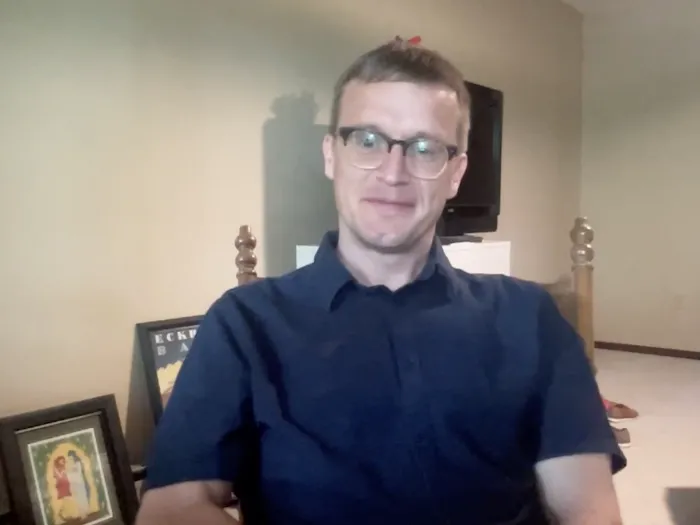
Author and pastor Kara Eidson is the most recent guest on ‘A Matter of Faith: A Presby Podcast’
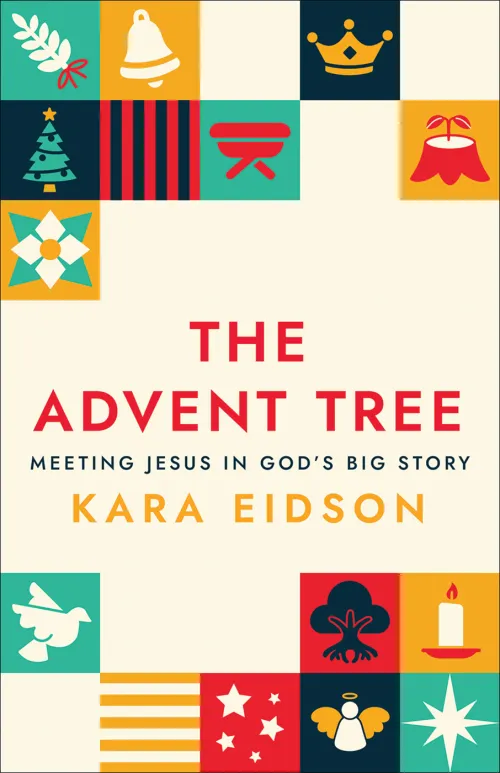
LOUISVILLE — Well ahead of this year’s Advent season, the Rev. Kara Eidson invites readers to explore her new book, “The Advent Tree: Meeting Jesus in God’s Big Story.” The book was published Tuesday by Westminster John Knox Press. View a video of Eidson discussing the book here.
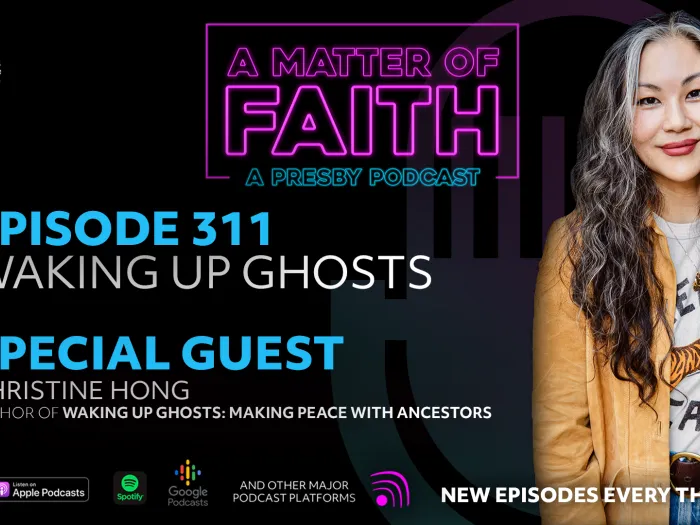
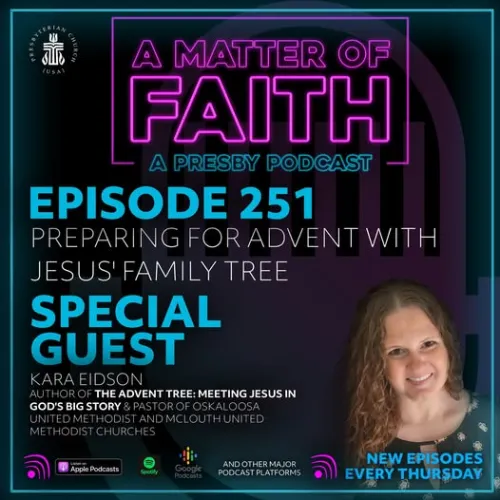
A United Methodist Church pastor who leads two congregations, Eidson was the guest last week on “A Matter of Faith: A Presby Podcast,” hosted by Simon Doong and the Rev. Lee Catoe. Listen to their 49-minute conversation here.
Catoe posed this question: “When we talk about Jesus, we focus on what he did during his life and ministry. But we don’t spend much time talking about his ancestry and family history. How can looking at Jesus’ family history enhance our understanding of what it means to be a Christian and a follower of God?”
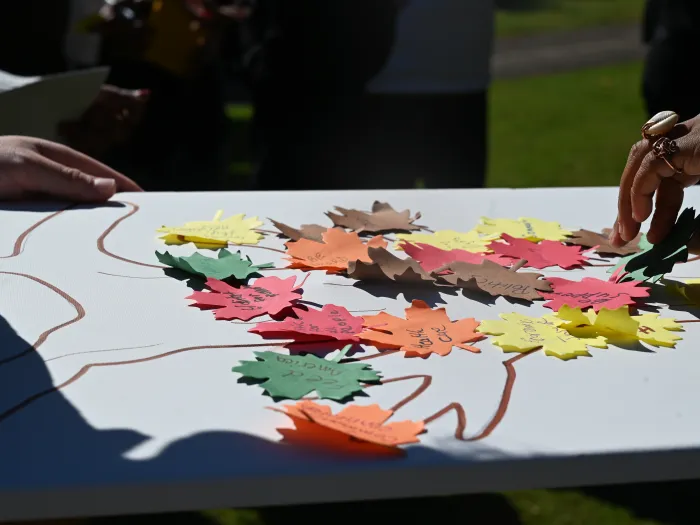
Eidson explained the Jesse Tree tradition to the hosts, art that goes back to people in the Book of Isaiah and illustrates Jesus’ ancestors as delineated in the gospels of Matthew and Luke. The earliest example is an illuminated manuscript from the 11th century. “The Advent Tree” differs a bit “because not every story in the book is directly from Jesus’ line,” she told the hosts. “I was more trying to tell the story of who is Jesus in the context of both history and his story, not just who he is genetically related to.”
She pointed out that Jesus was “born into a specific context, born as a Jewish man into what was a Roman-occupied state.” Eidson takes Jesus’ narrative all the way back to the Creation story, “because in most Trinitarian traditions, there’s a belief that Jesus doesn’t start existing” on the day he was born, but is part of the Trinity. “‘In the beginning was the Word, and the Word was with God, and the Word was God,’” she quoted from John’s gospel, “and so we start with the beginning, all the way back.”
In addition, these stories are important because they tell us something about who we are, she said. “My story doesn’t start on the day I was born. My story goes back specifically a few generations to the folks who helped mold and shape me, and even further back” to those ancestors’ ancestors, she said.
One chapter in the book, “Midwives of a Movement,” is placed in the third week of Advent and looks at women including Rahab and Bathsheba, and Shiphrah and Puah, the midwives who helped rescue Hebrew babies from Pharaoh’s murderous decree. The book also discusses Miriam her mother Jochebed, key figures in saving the baby Moses.
The more Eidson read up on Bathsheba, “the more David looks worse and worse in that story. I didn’t hold back any punches,” she said. “I think when we’re dealing with difficult scripture, it doesn’t do us any favors to look away. … We wrestle with it. Saying ‘I’m just going to pretend that’s not there’ is not really an option, and so we struggle with that.”
Rahab is a foreigner and is outside the faith “at a time in history that was very xenophobic,” Eidson said. “We end up with these characters time and time again who are outsiders,” including Ruth, “a foreigner who comes in and becomes a part of Jesus’ familial line as well.”
“If we go back far enough in most families, there’s some tea there for most of us,” Eidson noted.
Doong called that “a way to make Jesus’ very being so much more relatable to our own.”
“Jesus has his human line, and he’s also the son of God, and no one knows exactly how that works,” Doong said. “He has an air of mystery to his origin story and to his heritage that is relatable to folks regardless of how much they know about their own family.”
Eidson also discusses the importance of chosen families in the book, related especially to the story of Ruth. “A family is not necessarily the people we are related to,” she said. In a family devotional section in the book, “I don’t use the term ‘parents.’ I talk about ‘your grownups.’ I also talk about identifying those folks who are family by choice and who we live into the reality of family with, even though they might not be related to us by biology.”
There were times when Jesus’ biological family didn’t understand what he was doing, Catoe noted. “When we’re talking about genealogy, we talk about ways our ancestors influenced us in ways we don’t know about and in ways that we do. In all these stories, there’s trauma attached to them. It reflects how attuned to people Jesus was.”
Some traumas and traditions need to left behind, Eidson said, but “other things are carried forward and are integral parts of who we are.” In the church Eidson’s grandmother attended, women weren’t allowed to preach. A visiting pastor came to their small town, “and it was very much a ‘Footloose’ situation,” she said.
The pastor told parishioners that “our kids can’t go to dances,” and Eidson’s grandmother told him, “that’s just bad theology.”
“She basically single-handedly chased this guy out of town. She used the authority and the power she had in place to change the situation, even though she was in a situation that didn’t necessarily grant her that authority or power,” Eidson said. “She claimed it.”
Catoe called Advent “a time of waiting and reflection, and interior work we do while we wait for the Christ child to come into a world that isn’t perfect.”
“What if we had a conversation about what does it mean for us to be the church now,” he said, “and strip away this idea we are supposed to be these perfect people and have it all together when we don’t?”
Indeed, Advent is “a season of waiting and anticipation, a season of preparation,” Eidson said. “It’s not this automatic ‘I can have whatever I want shipped to my house in 24 hours.’ That kind of instant gratification that we have become accustomed to is not a part of the Advent experience.”
“It’s important to make those spaces of waiting and preparation,” she said, “and not get straight to the part of the Christmas story.”
New episodes of “A Matter of Faith: A Presby Podcast” drop every Thursday. Listen to previous editions here.
You may freely reuse and distribute this article in its entirety for non-commercial purposes in any medium. Please include author attribution, photography credits, and a link to the original article. This work is licensed under a Creative Commons Attribution-NonCommercial-NoDeratives 4.0 International License.