New worshiping community supports South Sudanese women in Minnesota
Pastor Elizabeth Tot builds community from refugee camps to St. Cloud

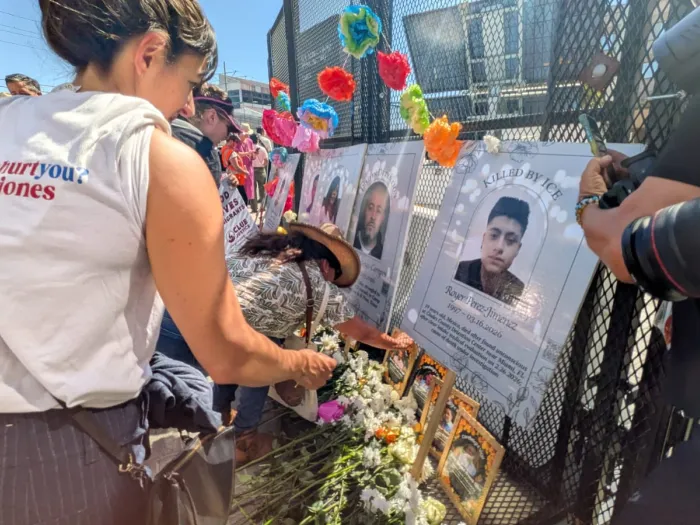
On July 4, after weeks of legal battles, President Trump deported eight men from various countries of origin to South Sudan, a nation known for major humanitarian crises that have spanned several decades and resulted in an estimated 2.3 million refugees.
Here in the United States, Pastor Elizabeth Tot, a Presbyterian minister who emigrated from South Sudan, has been supporting refugees from South Sudan, mostly women and children, through a prayer fellowship in Minnesota for the last 15 years.
In 2007, Tot and two of her children arrived in Buffalo, New York, as refugees from South Sudan by way of Ethiopia and Kenya. Other than her family, there weren’t many people in Buffalo who spoke Nuer, her South Sudanese language. In 2010 she moved to Minnesota, where Sudanese immigrants had built communities after finding work in the meat processing industry. Tot began her ministry to the community right away. On her days off, she would visit mothers raising children on their own. “I brought them something for the children, as is our custom back home, a toy or some money for food, and then I would pray with them,” Tot said as her son, Thijin Gatwech, translated from Nuer to English.

The women were always glad to see her, while Tot was grateful to have a way to fulfill her calling. Elizabeth was Tot’s baptismal name; her Nuer name is “Nyareat,” which means “orphan girl.” Tot explained that it is customary to name a child after the circumstances of her birth. Tot’s mother died in childbirth. Without a mother, her survival was uncertain. Her father’s work as a cattle herder meant long periods away from home and the village. At that time, burying the infant with the mother was a plausible solution, but an aunt stepped in to take her for a few years until she was passed among the women in her extended family. At age 8, she was baptized as a Christian in the church where her father served as elder.

In church, she soon learned about the story of Moses, who was taken from his mother to fulfill God’s purpose and later be reconciled to his family. Tot understood her life had also been saved to serve God. At age 30, with a husband serving as a soldier in the liberation struggle for Southern Sudan, she was displaced to a refugee camp in Ethiopia. Separated from her husband, she decided not to remarry but to dedicate her life to raising her family in the refugee camp and ministering to other families there. According to her son, Tot’s eldest daughter settled in the United States in 1999 with the help of a “missionary woman who saw the hard life of refugees in the Ethiopia’s Dimma Refugee camp.” In 2004, that daughter helped the rest of the family to relocate to the United States by moving to Nairobi, Kenya, where sponsorship to come to the United States was easier.
In adulthood, Tot served as an elder and a deacon for more than 18 years before she was ordained by the Presbyterian Church in East Africa, headquartered in Nairobi. She served as a pastor there for three years before coming to the United States.
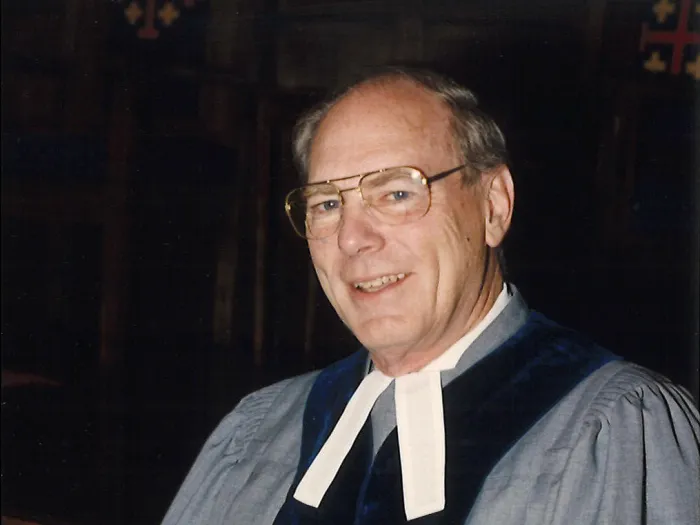
In 2010, she arrived in St. Cloud, Minnesota, and met the Rev. Ed Morgan, who gave her a space at First Presbyterian Church of St. Cloud to hold prayer meetings on Sunday afternoons. Morgan helped Tot in her process to have her ordination recognized by the Presbytery of Minnesota Valleys. Although Morgan has since retired, the South Sudanese Ministry that Tot pastors continues to meet there.
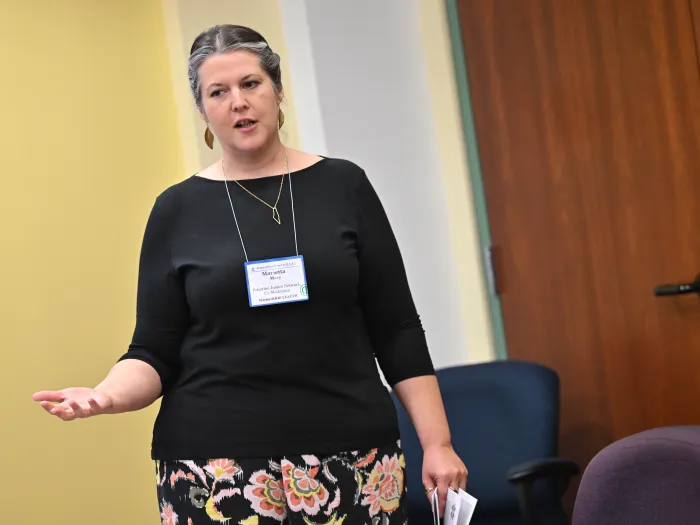
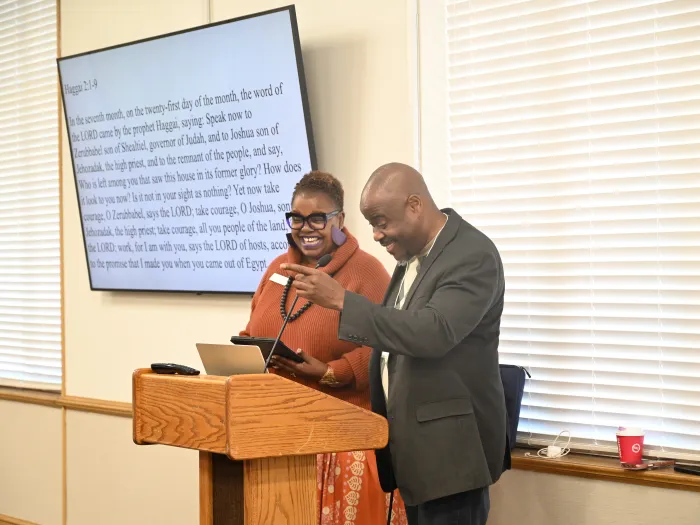
When the Rev. Beth Buckwalter-Miller became executive presbyter of the Presbytery of Minnesota Valleys in 2022, she made a point of visiting Tot to learn about her story and her ministry. Despite the language barrier, the women developed a deep bond, thanks in part to the translation skills and care of Gatwech. Buckwalter-Miller worked to move the support of the South Sudanese Fellowship from one congregation to be a ministry of the presbytery. She also connected Tot to broader denominational resources through the Rev. Michael Gehrling of the 1001 New Worshiping Communities movement and the Rev. Princeton Abaraoha, intercultural congregational associate for Racial Equity & Women’s Intercultural Ministries within the Interim United Agency of the PC(USA).
In 2024, the South Sudanese Fellowship received a seed grant through the 1001 New Worshiping Communities movement.
“Pastor Elizabeth has been leading the South Sudanese fellowship in St. Cloud for quite a while, but she was not receiving any salary for her work. This felt like an injustice, so the presbytery began to pursue the idea of having pastor Elizabeth become a part of 1001,” said Buckwalter-Miller, who had seen Tot’s humble lodgings and vehicle, whose maintenance took a back seat to Tot’s care for the single mothers she visited and supported through gifts from her own secular wages. Tot was also approaching her mid-60s and shifting from factory to domestic work with shorter hours.
In addition to the access to grants and ministry training of 1001 NWC, Buckwalter-Miller explained how, through the leadership of the presbytery's Committee on Presbytery Life and guidance of its chairperson, the Rev. Leanne Thompson, “the presbytery pledged monthly support of $2,100 to Pastor Elizabeth, recognizing that her congregation will not be able to pay her a salary.” The support of the South Sudanese Fellowship is a primary expression of the Presbytery of Minnesota Valleys’ commitment to the Matthew 25 movement.
Building a relationship with Tot and Gatwech has been important to the process of adopting this fellowship as a ministry of the presbytery. When Buckwalter-Miller was sick, Tot offered to visit and pray with her in her home. On a later visit, a game of Yahtzee erupted into fits of laughter. Before any grant applications or presbytery votes, Thompson, Abaraoha and Buckwalter-Miller traveled to St. Cloud for lunch with Tot and Gatwech to consider the possibilities of support for the South Sudanese Fellowship. Abaraoha and Buckwalter-Miller have also supported Gatwech in his discernment.

Gatwech has discerned a call to minister to the Sudanese American diaspora, focusing on bridging generational gaps by providing education on mental health, trauma, and resettlement in the U.S., along with financial literacy and cultural identity awareness. This work helps Sudanese Americans better navigate their lives, bringing together both adults and youth.
"We must do more than invite them to give a presentation. We need to get to know them as people,” explained Buckwalter-Miller. Abaraoha began coaching calls with Tot and recognized the emotional and financial needs of those Tot serves. “Within a 30-minute coaching call, Elizabeth will receive five different calls from the women in her congregation,” said Abaraoha, who was impressed by how responsive Tot is to the calls for help even with limited resources.
“A ministry represents the village for immigrants,” explained Abaraoha. “That’s where they come for truth and comfort. There's a shoulder to cry on.” Abaraoha explained how Tot “would use the meager money she made from whichever factory where she was working to buy groceries for these ladies and pay her own gas out of that little money to go to sometimes an hour drive to visit the woman in need when a husband walked out.”
Abaraoha said, “That's what moved me when I heard her story.” He hopes the national church will welcome African Presbyterians, old and new, and learn from the witness of leaders like Tot. “I tell my executive presbyter every time: You need to learn that we, immigrants, can teach you, Americans, how to live in scarcity.”
In his work as an intercultural congregational associate, Abaraoha works with mid councils and their African diaspora congregations in developing better cultural understanding and bridging any perceived distances between Presbyterians in the United States and those originating in African presbyteries. The need for better understanding is most apparent when presbyteries are deciding whether or not to recognize the ordination status of immigrant pastors or determining what process must be taken toward ordination for candidates to ministry or immigrant commissioned ruling elders. Such topics were the concern of several resolutions considered by the Committee on Ordination at the 226th General Assembly in 2024.
He was impressed by the home visit exchange of Buckwalter-Miller, Tot and Thompson and expressed appreciation for the relationship building they formed as a part of discerning a call to share in each other’s ministry. Showing up is a message he gives to younger African immigrants when looking for a church home in non-immigrant churches, too. “Go serve the sessions,” he said, then he told them, “Your session is full of ‘300-year-old people.’ They need your energy," Abaraoha joked. “Cameroonians are Presbyterians from Africa. Ghanaians are Presbyterians from Africa. Kenyans are Presbyterians from Africa. Zimbabwe, Zambia, South Africa all have presbyteries,” he said. Abaraoha also sees how immigrants who didn’t start out Presbyterian, like many from the Congo, are attracted to PC(USA) congregations. “These folks who worship in our buildings are picking up the essence of our theology, and they love it, and they want to become Presbyterians,” he said.

For Tot, her call to ministry has always been international. In 2024, she traveled with Gatwech to Ethiopia and spent three months there, returning in February 2025. Tot visited the city her parents once lived in and founded a new church with pastor William Muon Gach by raising 1 million Ethiopian birr ($10,000) through contacts in St. Cloud.
Kɔth ɛ Nhök (God is Love) Community Church of Africa is an extension of Tot’s ministry in St. Cloud with the vision “to disciple, uplift, and serve the community through faith, compassion and action service.” The congregation aspires to be “a welcoming place where children and families find guidance, education and spiritual support” for more than 300 families by “fostering self-sustaining programs, putting children in school and supporting mothers.”

Tot dreams of supporting the installation of a clean water source at the church and eventually funding an orphanage to care for vulnerable children like she once was. But the great financial needs of her congregation in St. Cloud have not deterred her from hearing God’s call to tend to the needs of South Sudanese in Ethiopia. For her, scarcity is not a sign of God’s absence, but an invitation to draw closer to the Divine Presence through loving her neighbor.
Donations to the South Sudanese Fellowship and its mission in Ethiopia can be made through the First Presbyterian Church of St. Cloud, which acts as its fiscal agent.
You may freely reuse and distribute this article in its entirety for non-commercial purposes in any medium. Please include author attribution, photography credits, and a link to the original article. This work is licensed under a Creative Commons Attribution-NonCommercial-NoDeratives 4.0 International License.