Rooted in Rights
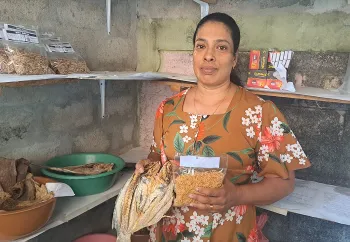
Nestled in the northern region of Sri Lanka are eight communities — home to more than 3,100 families living on generational land that they depend on for food and economic security. But when a corporation proposed building a massive cement factory on that same land, threatening the livelihoods of the locals, they refused to stay silent.
The threat was real and immediate, posing environmental degradation and risking the health of their community and beyond, not to mention the destruction of livelihoods and loss of ancestral land for an entire region. Rather than waiting to see what would happen, the communities organized, learned and took matters into their own hands.
With support from the Praja Abhilasha (PA) [SAY PRAH-JUH UH-BEE-LAH-SHAH] Network, a trusted Presbyterian Church (U.S.A.) partner in Sri Lanka, local leaders were able to organize and mobilize community members. Together, they created awareness programs, held collective meetings, coordinated a unified response and organized a Farmers’ Day to demonstrate the land’s ecological and community value to the government.
In the name of justice and advocacy, the communities decided to act — and through the Presbyterian Hunger Program’s Joining Hands initiative, supported in part by gifts through the Presbyterian Giving Catalog, they didn’t have to act alone.
The PA Network was joined by two environmental groups, five NGOs and a wider circle of civil society allies, bringing greater visibility and technical support to the cause. Locally, five community-based paralegal teams were established to conduct awareness sessions on land rights and to support land claims with documentation. In addition, communities used social media to amplify their voice and garner support well beyond the villages’ boarders.
Slowly, they gained traction. Government engagement increased and the cement factory’s implementation and plans stalled. More than 600 community members became confident, organized advocates for their futures, with agriculture, fishing and livestock activities continuing uninterrupted across all eight communities.
“Organized, informed and legally empowered communities, supported by strong networks, can successfully resist harmful development and advance people-centered, sustainable alternatives,” the PA Network shared in reflecting on the initiative.
Now, the communities are looking ahead. Alongside continued advocacy for basic infrastructure like roads, electricity and clean drinking water, residents also hope to establish a sea cucumber collection and processing center to create new, sustainable, export opportunities.
More Ground to Cover
Across Sri Lanka, the PA Network — a partner of the Presbyterian Church (U.S.A.)’s hunger ministries — is helping vulnerable communities defend their generational land and water, while reviving traditional food practices that can sustain families through economic upheaval and climate change. In 2025, the PA Network reached more than 3,400 people (84% of whom are women) across 19 districts, trained 145 self-sufficient unit leaders and 35 community paralegals, and helped reclaim over 117 acres of land from military control.
This is what it means to sustain a community: not just providing immediate relief but standing alongside people as they protect their land, livelihoods and futures. Through the Presbyterian Giving Catalog, you can help support the Church’s mission to Sustain Communities for the families of Sri Lanka, and others who are rooting for their own rights around the globe.
Photo courtesy of Praja Abhilasha



 Receive a fair trade, handmade ornament for gifts totaling $150 or more!